
Phew Blog
Apr 17, 2026
Short answer: LinkedIn is signaling that trusted people now carry more of the attention, trust, and interpretation work than company pages do. That does not make company pages useless. It changes what each surface is for.
If you still treat the company page as the main engine of reach, you are reading the platform one version behind.
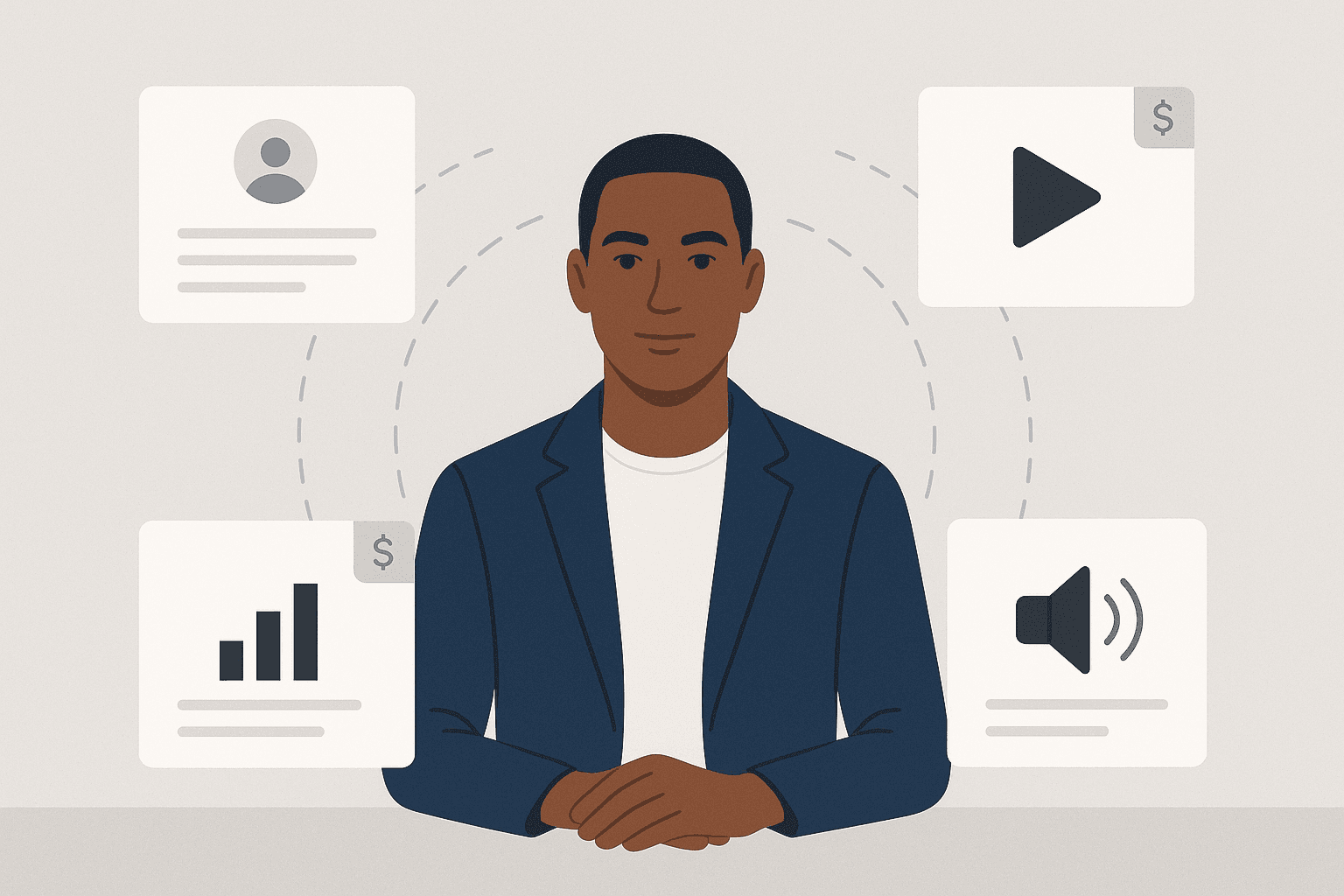
People create trust. Pages organize proof. That is the shift.
LinkedIn keeps moving in the same direction. It gives more visibility to identifiable experts, more weight to authored perspectives, and more product energy to formats that feel personal rather than committee-written.
That matters because platform design is never neutral. What LinkedIn makes easier to promote is also what it believes the market is more likely to trust.
And increasingly, that is not the polished company-page update. It is the operator, founder, researcher, or subject-matter expert who can explain what changed and why it matters.
A lot of teams treat this like a feature story. New creator tools. New sponsorship options. New formats. But the deeper change is behavioral.
LinkedIn keeps rewarding content that sounds like it came from someone with real judgment, not from a brand committee trying to avoid risk.
That is why bland page posts now disappear so easily. They may still be correct, but they rarely carry tension, specificity, or interpretation. They say what happened. They do not help the reader understand what it means.
A company page is usually where information gets archived. A person is where interpretation happens.
That distinction matters more than most teams admit. When the market shifts, readers are not only looking for announcements. They are looking for someone credible to help them decide what matters, what to ignore, and what to do next.
A page can publish a launch. A trusted person can explain the tradeoff behind the launch, the customer problem that forced it, and the strategic lesson underneath it.
That second layer is what tends to earn attention.
This is not an argument for abandoning the company page.
Company pages still matter for proof, launches, hiring, product updates, event moments, and brand-level references the market may need later. They are useful as infrastructure.
What they are much worse at now is carrying category interpretation, lived judgment, or the kind of point of view that makes people stop scrolling.
The strongest teams are not trying to make the company page more “engaging” in the abstract. They are reorganizing around people-powered distribution.
They identify who inside the business has real signal. Usually that means one founder with conviction, one operator who understands where execution breaks, and one product or research voice who sees patterns early.
Then they build a workflow around those people so insight does not die in Slack, meetings, or half-finished notes.
The company page still plays a role, but as support. The person creates movement. The page reinforces it with proof.
Most teams respond to this shift by trying to fake creator energy. They over-template executive posts, smooth out every sharp edge, and turn real people into brand puppets.
That misses the point. The opportunity is not to make executives sound more like creators. It is to make real expertise easier to publish without flattening it.
A practical split looks like this.
Use people for: interpretation, point of view, fast reaction, customer-pattern observations, and category perspective.
Use pages for: proof, launches, official updates, hiring, and durable brand context.
When both matter, sequence them. Let the person create the interpretation first, then let the page consolidate the proof.
That is usually much stronger than posting the safe brand version first and hoping a human can add life to it later.
At Phew, this is the workflow problem that keeps showing up. The hard part is not simply generating more words. The hard part is spotting which insight is worth publishing, shaping it quickly, and keeping the voice close enough to the person that it still feels real.
If LinkedIn keeps rewarding authored expertise, then the winning system is not just a writing system. It is a relevance, workflow, and voice system.
LinkedIn is not killing company pages. It is just making them less central.
The teams that understand that early will build stronger distribution because they will stop forcing the wrong kind of content through the wrong surface.
People create trust. Pages extend it.
If you do want to try Phew free for 7 days and see your social score, here is where to start.